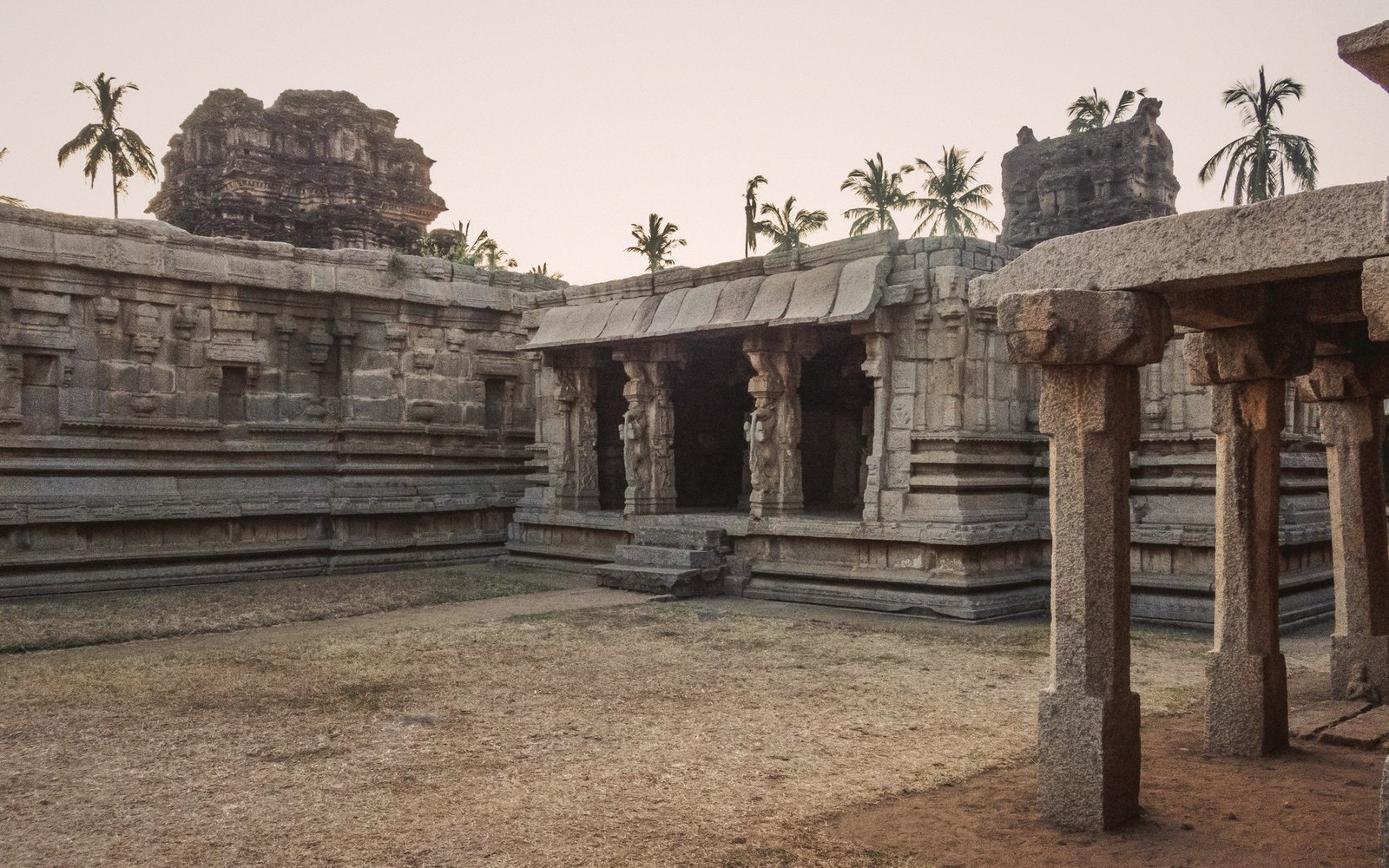
The constraint hidden in plain sight
Every major doorway through a gopuram's base — the dvara, the passage cut through solid granite masonry — is framed by two jambs and a single lintel spanning between them. No arch, no voussoirs, no load distributed around a curve: the lintel takes the full bearing load of the courses above it in simple bending, and it is one stone. Width of opening equals length of stone available, minus two bearing seats. That is the whole equation.
Granite in bending is weak. It handles compression well, but a lintel loaded from above develops tension in its lower face, and granite's tensile strength is modest — somewhere between a twentieth and a thirtieth of its compressive strength, depending on crystal structure and grain. Builders here knew this empirically long before it was measured: the lintels are deep, not wide, to push the neutral axis up, and the bearing seats on the jambs are generous, distributing the reaction across as much bed area as possible.
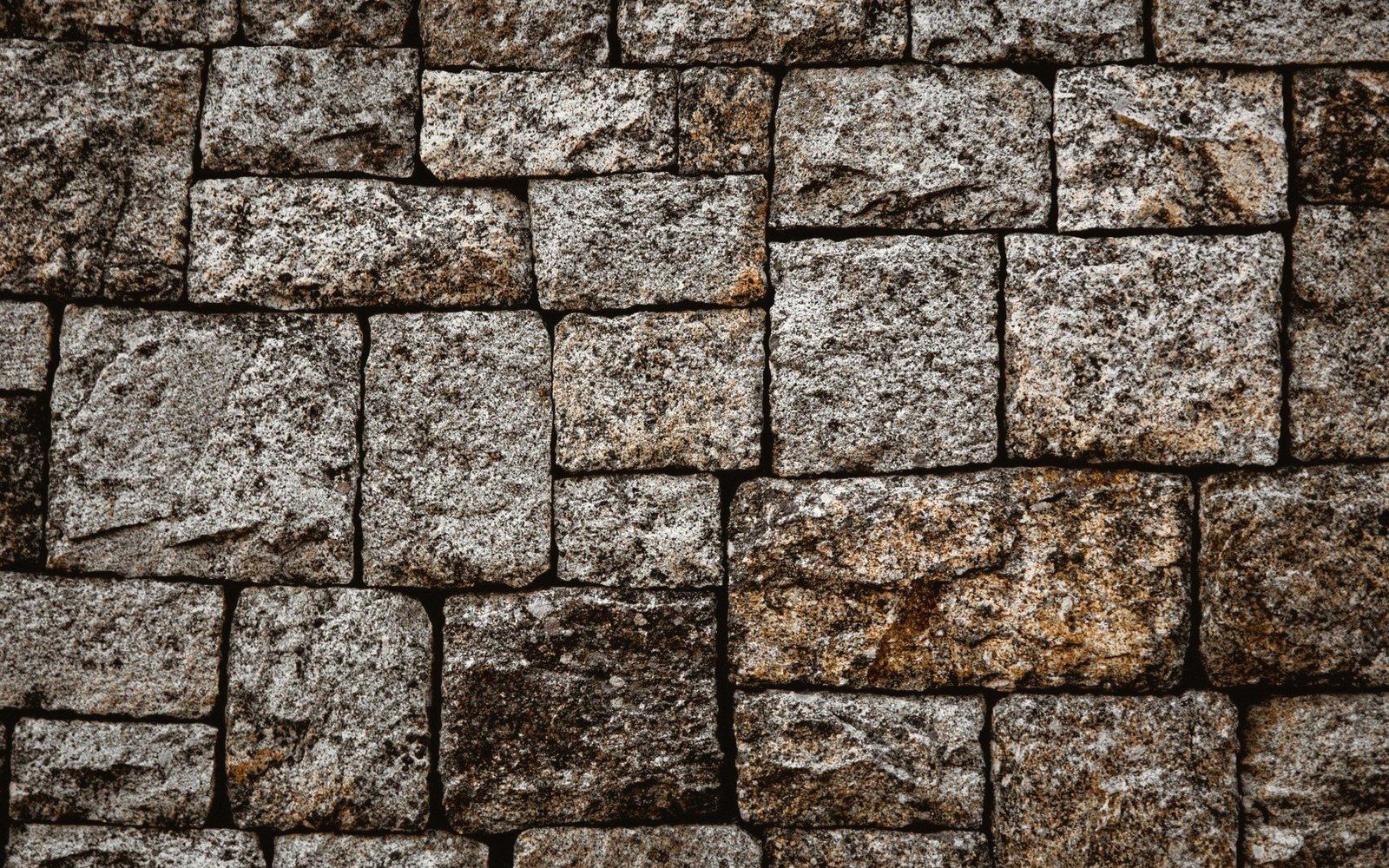
Lintel depth — increased to raise the neutral axis and reduce tensile stress in the lower face
Photo: Jorge Urosa / Pexels
The stone itself sets a practical upper limit before the material even becomes a consideration. A monolithic granite lintel long enough to bridge a wide opening, deep enough not to fail in bending, and thick enough not to crack under its own weight during transport becomes very heavy very quickly — and getting it there is its own problem. The doorways through gopuram bases are consequently narrower than modern visitors expect of a gate that once admitted festival processions. The answer for processions was not a wider opening but a taller one: the proportions stretch vertically, not horizontally.
| No. | Item | What it is |
|---|---|---|
| 01 | Bearing seat | the contact area between lintel end and jamb top; sized generously to spread the reaction load |
| 02 | Dvara | the passage opening cut through the gopuram base; Tamil and Sanskrit architectural usage |
Where a second stone appears across a threshold, it signals a repair or a later insertion, not the original intent. The ambition of the tradition is a single span. The width you walk through is the width the quarry and the road allowed.
A gopuram is a stack of named parts. Read them in order and the taper explains itself: the section carrying the most is at the bottom, and every tier above sheds weight.