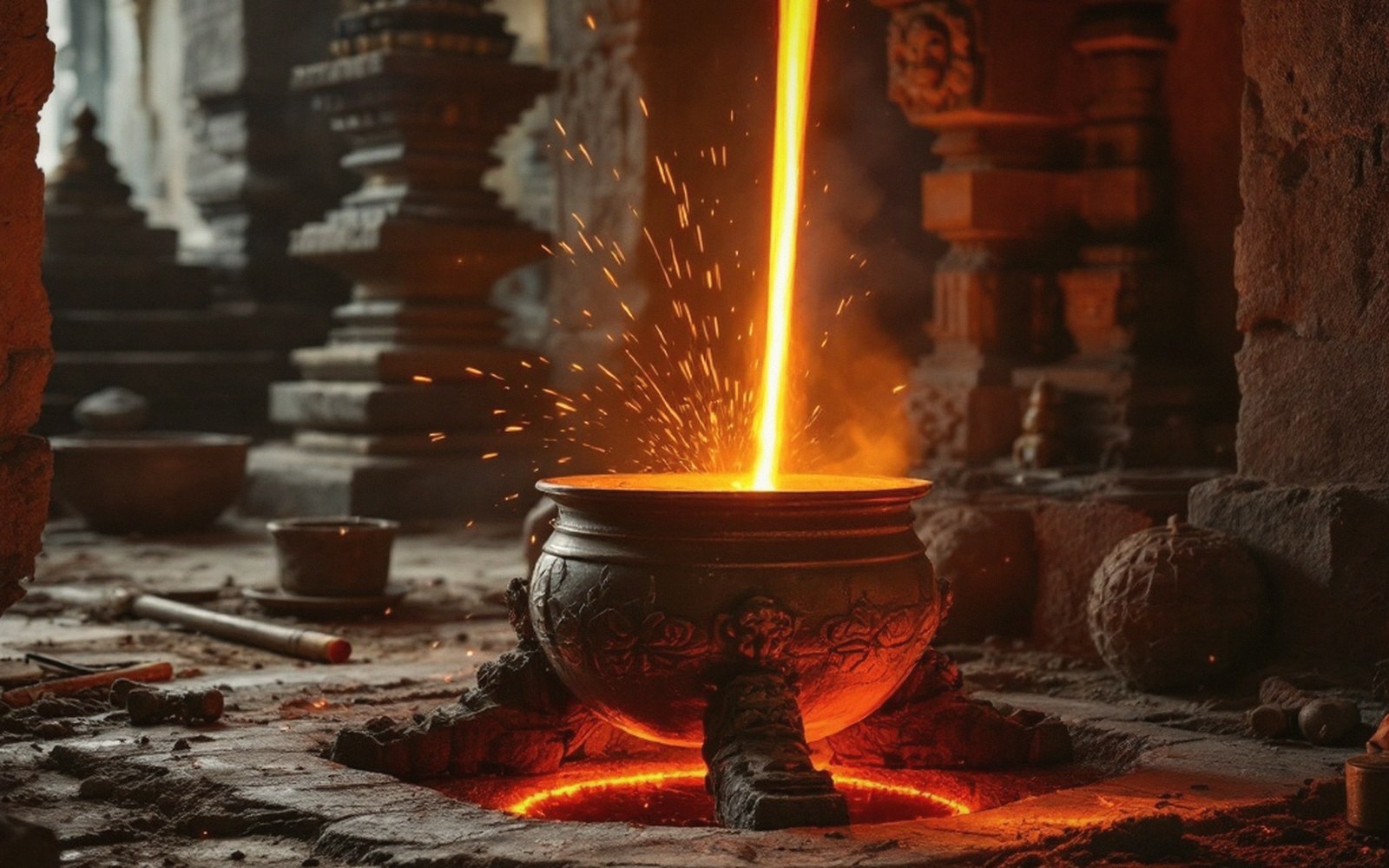
The sequence
The process begins with a wax positive — a model of the finished object built up by hand and tool to the exact surface the bronze will carry. For a standing figure, this means every fold of fabric, every joint of finger, every eye and eyebrow. In the South Indian tradition the wax used is typically a compound: beeswax as the base, softened with a proportion of resin and sometimes a small amount of oil to adjust working consistency and the temperature at which it flows. The carver works the warm wax with shaped metal tools, adding and removing material until the form is complete.
The first stage where everything is at risk is this one. The wax is the only record of the intended form. There is no pattern to return to, no other copy. If the wax distorts in heat before it is invested, or is dropped, the work is lost — not the casting but the entire design effort accumulated in that model. Workshops keep wax in controlled conditions for this reason, and a large figure may be built up in sections and assembled carefully to prevent slump.
Once the wax is finished, the investment begins. A layer of fine clay slip — liquid clay with a fine-grained material such as powdered brick or burnt dung ash mixed in — is painted onto the wax surface and allowed to dry. This first coat must capture every detail; its fineness is the fidelity of the final bronze. Coarser layers follow, building the mould wall to the thickness required to contain the pressure of molten metal. Wax sprues — channels for the metal to enter and for air and gases to escape — are attached before this outer casing is built up around them.
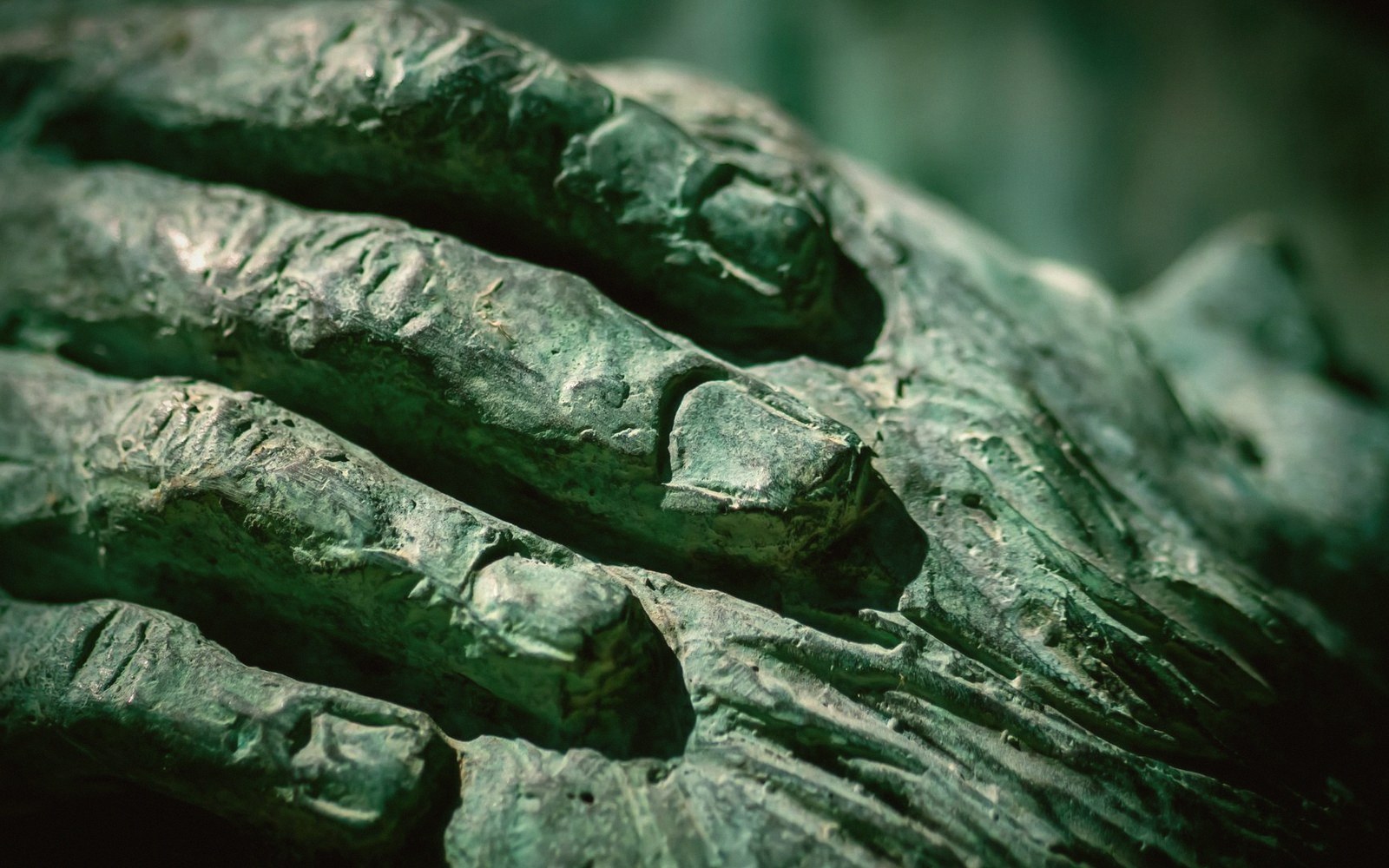
The pour — a cracked mould or interrupted pour means lost metal and no recoverable positive; must be completed in one continuous operation
Photo: The Daphne Lens / Pexels
When the investment is dry, the mould is fired. This does two things: it hardens the clay into a ceramic shell and it melts the wax, which runs out through the sprue channels. This is the moment the name comes from — cire perdue, or lost wax, though in the South Indian context the process is native and continuous and was not named from French usage. The mould is now hollow. The fired surface retains the impression of every tool mark from the original wax, because the fine inner coat dried against it directly.
The second stage where the piece can be lost is the pour. The mould, still hot from the firing kiln, receives the molten bronze. Pouring into a cold mould risks thermal shock and cracking; the mould must be at the right temperature to accept the metal without fracturing. The alloy — copper with tin and typically a small proportion of lead to aid fluidity — is poured in a single continuous operation. Any interruption to the pour traps a cold join in the bronze, a plane of weakness that may not show until the piece is cleaned or put under stress. A mould that cracks during the pour loses the metal to the ground and the wax model is already gone. There is no recovery.
Once the metal cools, the clay investment is broken away mechanically. This too is irreversible, but the risk is lower: the investment is designed to be broken, and the hardened bronze is robust. Sprues are cut, rough surfaces ground back, and the detail that is present in the bronze but not fully resolved — tool marks between the clay impression and the final surface — is worked cold. The hand that made the wax and the hand that finishes the bronze are both visible in the object; the fired clay between them is the part that does not survive.
Clay built up in layers, fine on the inside and coarse outside. Why the grading matters.