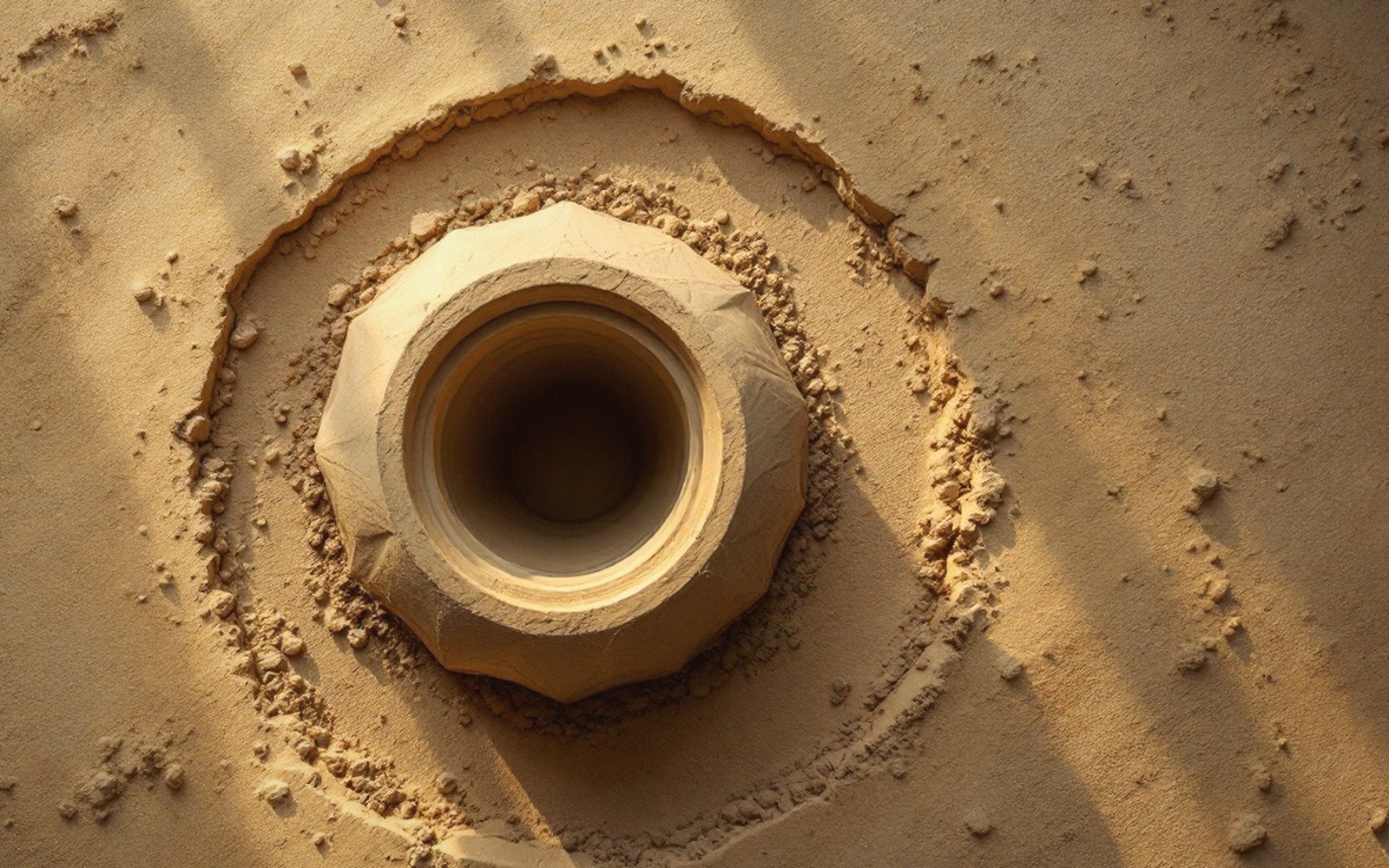
The Mould Wall
Lost-wax casting needs a mould that can do three incompatible things at once. It must be rigid enough to hold its shape under the weight and pressure of molten metal entering at temperature. It must be permeable enough to let the gases the metal drives ahead of it escape — a sealed mould traps air and the casting fails. And it must survive the thermal shock of bronze, poured somewhere above 1000 °C, meeting a room-temperature clay wall.
No single clay mix does all three. The answer is layered investment: a shell built up from inside outward, with each layer formulated for the job it sits in.
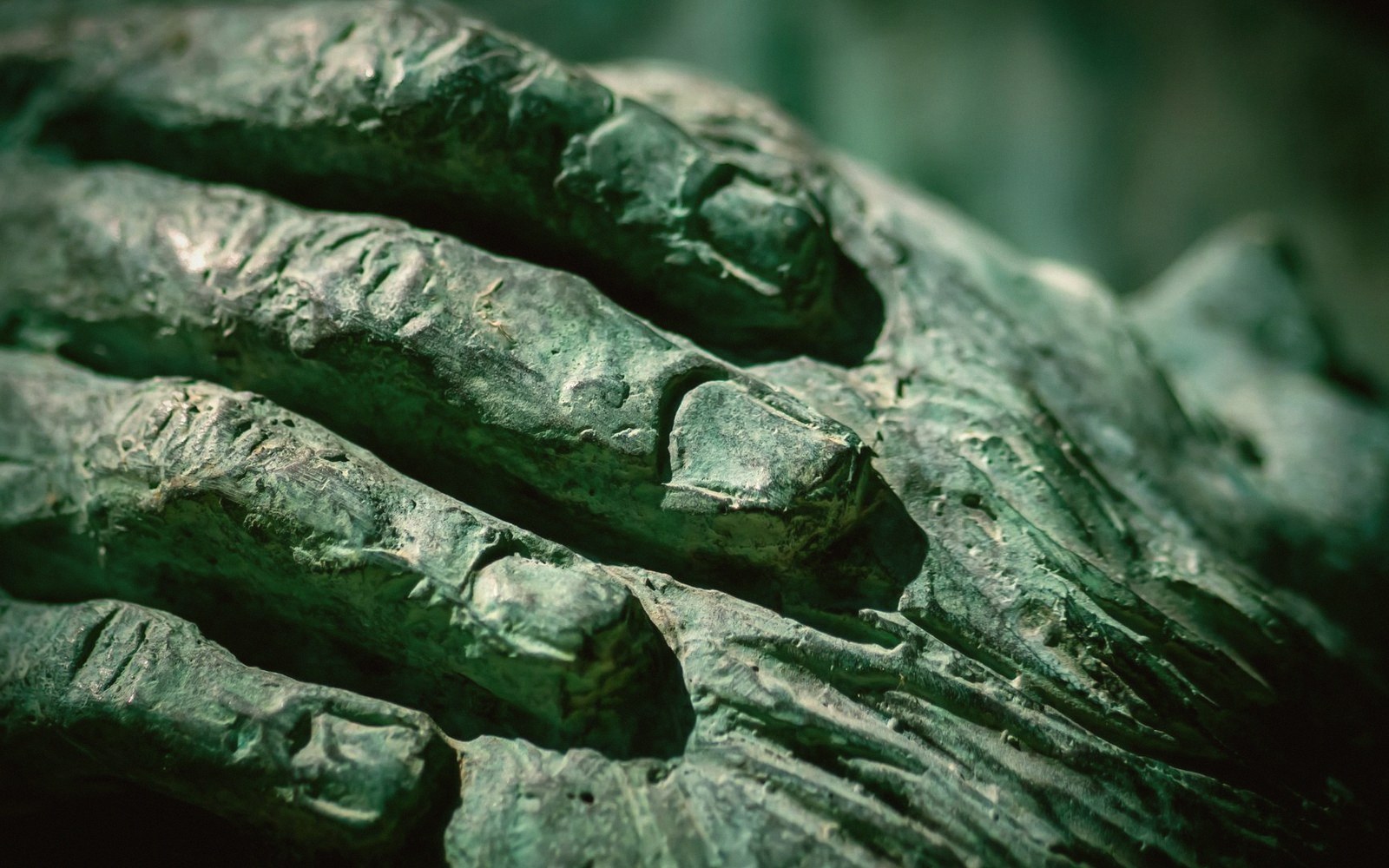
Coarse grit and organic temper (chaff, dung, fibre) — outer layers; structural and porous
Photo: The Daphne Lens / Pexels
The innermost coat — the one that touches the wax — is worked from fine-ground clay, often mixed with fine sand, cloth fibres, or the ash of burned rice husks. Fine material because fine material follows the surface. Every cut made in the wax, every tool mark, every deliberate texture has to register in the first coat; anything coarser than the detail level will bridge it, and the casting comes out blurred. This layer is applied by hand or brush and kept thin, building up in passes, each dried before the next, to avoid cracking.
Beyond the face coat, the composition shifts. Coarser grit and organic temper — chaff, dung, shredded fibre — go into the outer layers. Coarse for two reasons: coarse material is less prone to the dense cracking that traps gas, and organic inclusions burn out during firing, leaving a matrix of fine channels through which combustion gases and steam can vent. The outer shell is doing structural and respiratory work; the inner shell is doing representational work. Confusing the two — using fine impermeable clay throughout, or coarse porous clay on the face — produces either a mould that shatters or a casting that loses its surface.
The whole assembly dries slowly, in stages, for days. Then it is fired, which simultaneously hardens the clay, burns away the wax through the sprue channels cut for that purpose, and opens the organic temper to porosity. A mould that has been properly invested and fired rings when struck; one that has cracked or not dried through does not.
The casting itself, and the aftermath of breaking the mould away, belong to the wax model to pour sequence. What the investment stage contributes is the boundary condition: the fidelity of the surface, and whether the metal finds a wall or a failure waiting for it.
The lost-wax sequence in order, and the two stages where the whole piece is lost if it goes wrong.