Where the load runs
A monolithic granite shaft carries its load in compression, axle-straight from the bracket capital above to the plinth below. That load does not travel evenly across the entire cross-section. In a well-dressed column, the critical bearing area is the bed — the horizontal contact face at top and bottom, where the stone meets the stones above and below it. The shaft between those two beds is in compression along its length, but the surface is not a structural element. It is, in engineering terms, redundant to the load path.
This is the opening the carvers took.
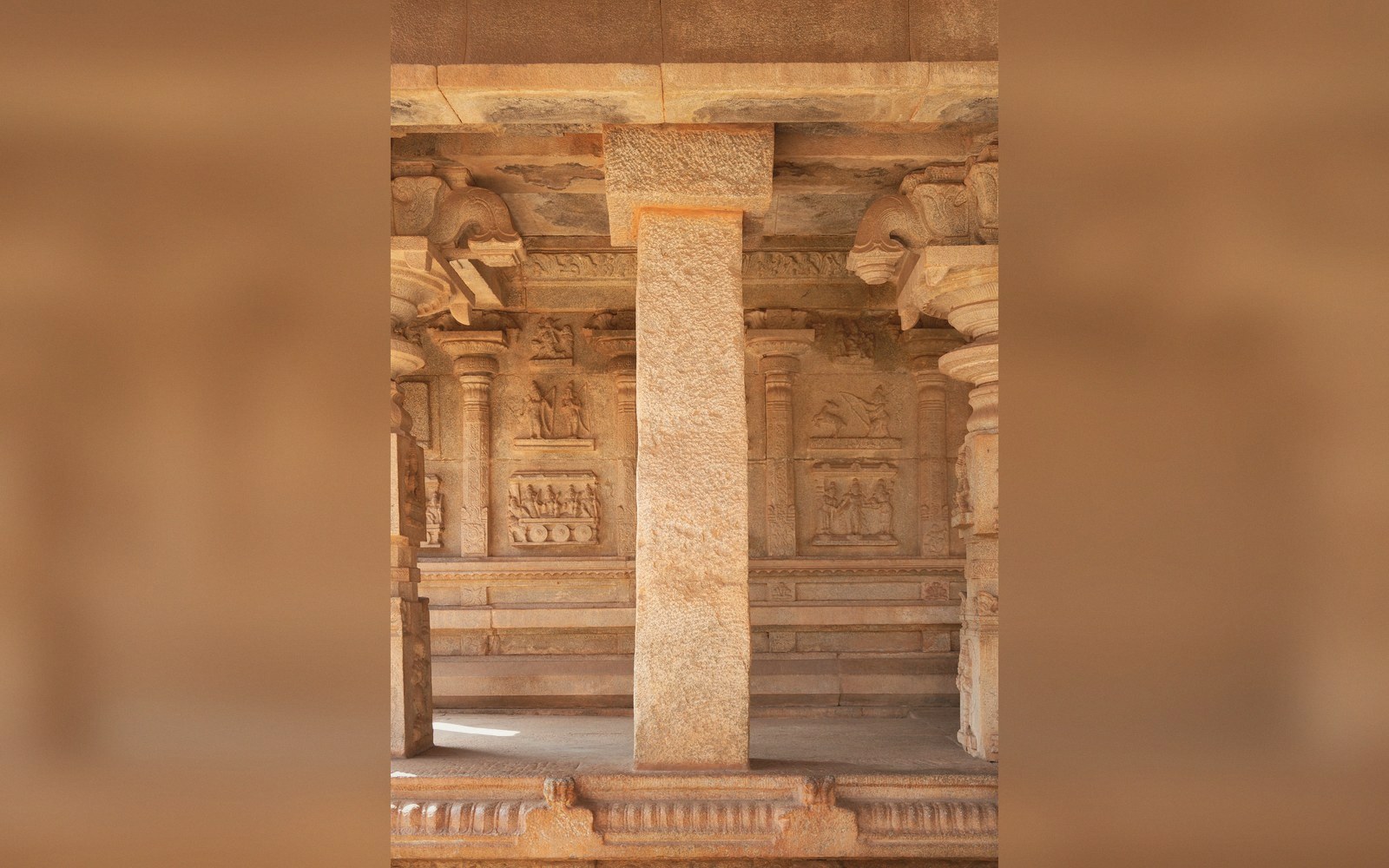
Shaft surface — carved; load path is axial, surface is redundant to it
Photo: Hampi - Hazara Rama Temple - Mandapa - Pillar · Wikimedia Commons
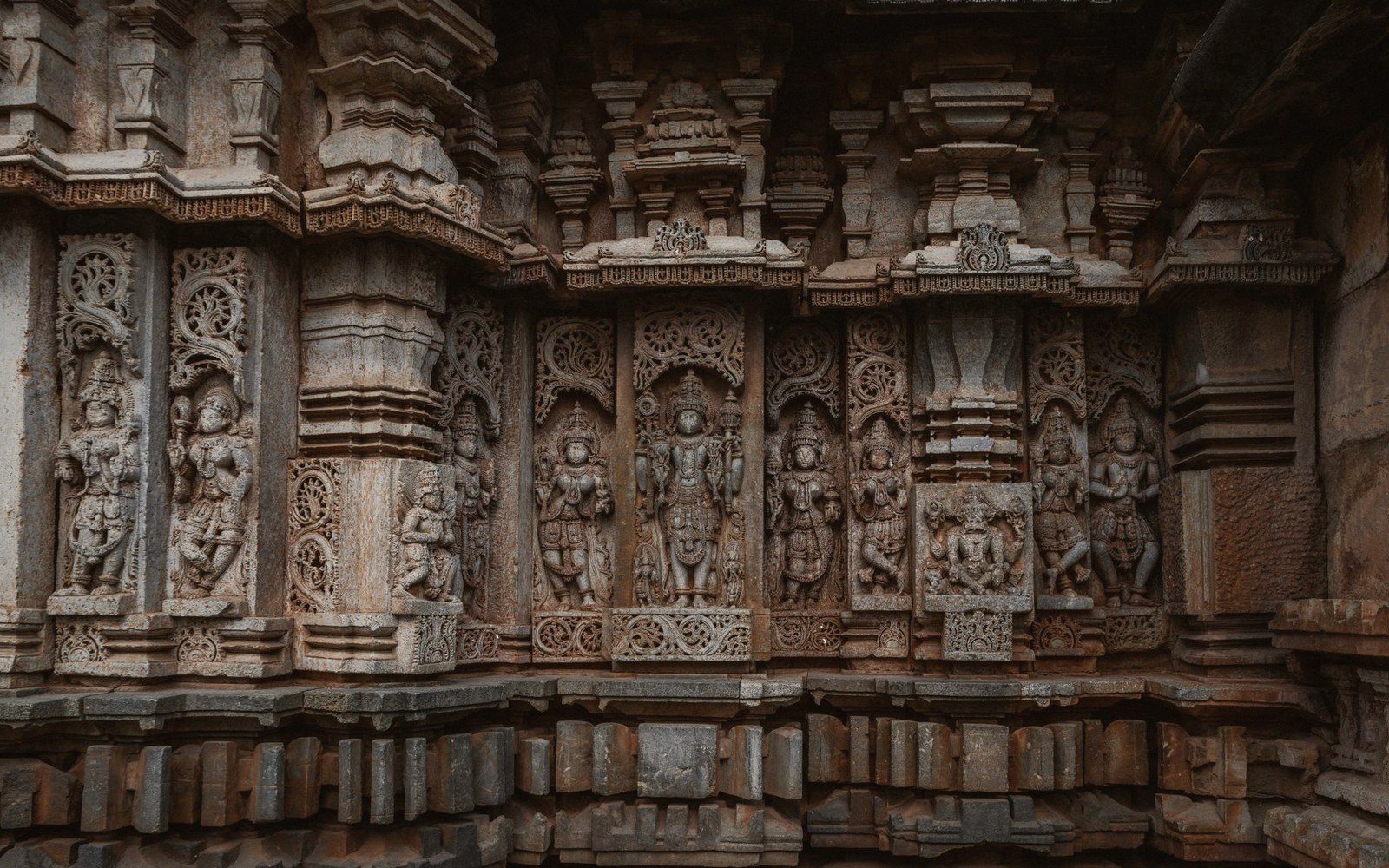
The typical pillared hall — mandapa — presents columns that appear richly worked: rearing yali (a leonine composite creature), attendant figures, jewelled bands, foliated mouldings. Look at where this ornament sits. It clusters at the base and capital zones, and it wraps the shaft's visible faces. It does not intrude onto the bearing beds. Where a shaft widens into a cushion capital or narrows to a necking, the mouldings run in annular bands — circumferential, not cutting into the section in ways that would reduce the net bearing area or introduce a stress-concentrating notch into a column under load.
The kumbha (the pot-bellied moulding near the base) and the bracket above are carved to shape, but the cross-sectional area at those transitions remains generous. A carver reducing the effective throat of a load-bearing member would eventually put cracks in it; the visual record of standing columns across Tamil Nadu is largely a record of avoiding exactly that.
| No. | Item | What it is |
|---|---|---|
| 01 | mandapa | pillared hall |
| 02 | yali | composite leonine creature, common on column shafts |
| 03 | kumbha | pot-bellied base moulding, carved but load-appropriate |
| 04 | stress-raiser | geometry that concentrates load at a point, promoting crack initiation |
Flat faces and concave flutes are the telling detail. Fluting a shaft reduces its cross-sectional area slightly but creates no notch that concentrates load; the flute is parallel to the load direction and introduces no transverse stress-raiser. The faces between flutes remain intact along the length of the shaft. Deeply undercut figure carving, where it occurs, is placed on the non-compressive, outward-facing portions — the decorative projections that the column does not need structurally.
This is not a written rule transmitted in a text. It is a constraint the material imposes: granite does not accept a badly placed cut without eventually advertising the mistake. The tradition that produced these columns was also the tradition that quarried, moved and dressed them. The people who knew how a shaft could crack were the people deciding where to carve.
The ornament is not applied to the column. It is what is left once the column has taken what it needs.
The grid of a pillared hall is set by the longest beam available, not by the plan.